
Nomi vs Kindroid (2026): Memory, Images, Voice & Control
Nomi and Kindroid compared for memory, selfies, voice, and roleplay controls.

This is a comparison of documented workflows and linked user reports. It is not a controlled head-to-head image test or a measured memory benchmark. Treat the recommendations as a shortlist for your own trial.
If your main goal is a repeatable public character feed, use the consistent AI influencer workflow to build references and check face drift before committing to an app.
Daily-use differences
| Decision | Nomi | Kindroid |
|---|---|---|
| First week | Faster emotional connection with less setup | More configuration before the character feels intentional |
| Memory workflow | Mostly consolidated behind the scenes | Backstory, key memories, journals, long-term recall, and subscriber memory tools are visible |
| Repairing a bad reply | Fewer direct steering controls; repair happens through conversation | Rerolls, directives, example messages, and chat controls make intervention easier |
| Images | Contextual selfies that feel like part of the relationship | Avatar-led Atelier workflow with descriptions, references, boosts, inpainting, couples, and video selfies |
| Best fit | Companion-first user | Roleplayer, builder, or visual power user |
Image-generation setup
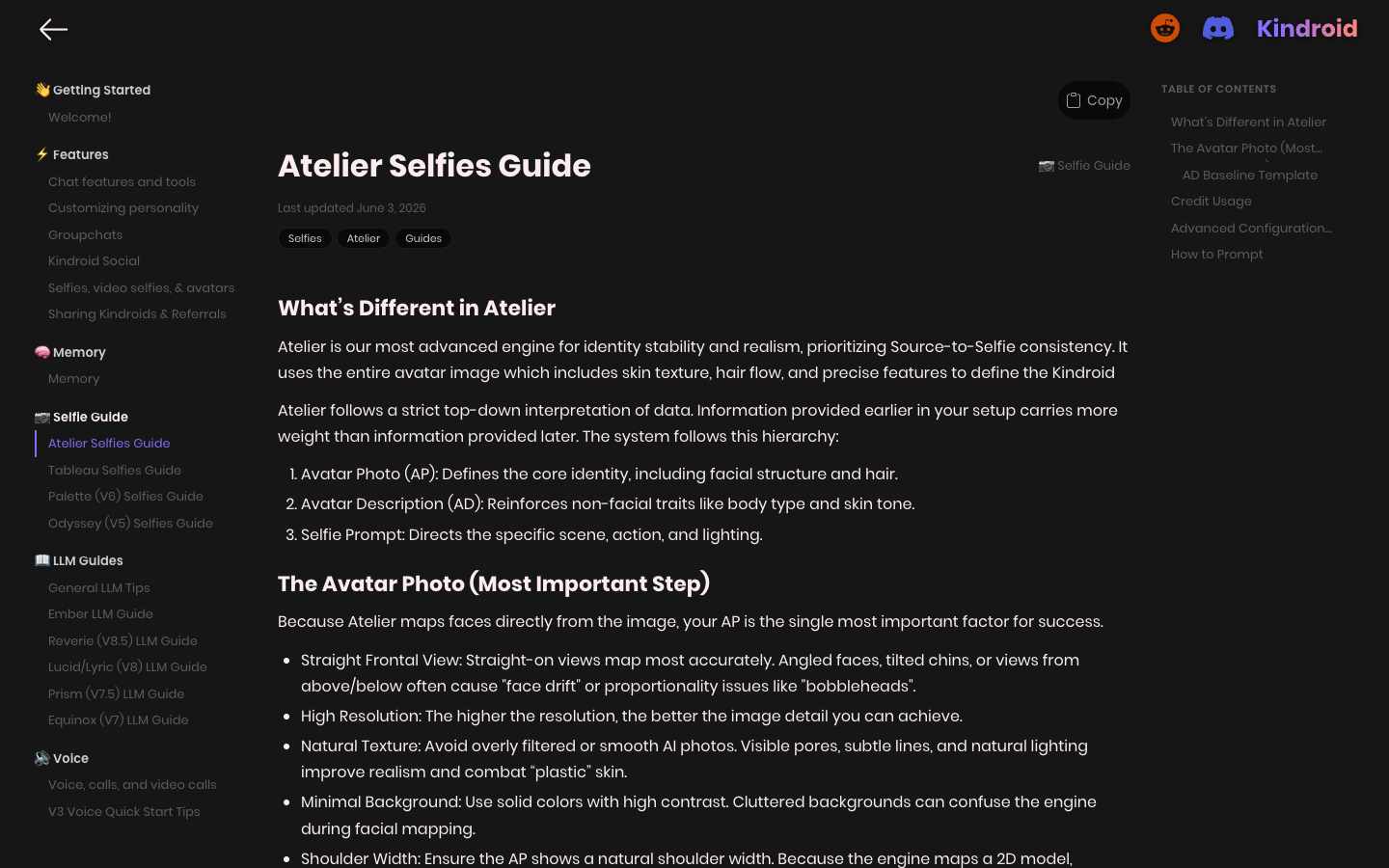
Kindroid documents an identity hierarchy for Atelier: the avatar image carries the most weight, then the avatar description, then the scene prompt. Improve the description or apply Photo Boost when likeness is weak; body shape, hair, and unusual features can still drift when the scene prompt conflicts with the avatar.
Nomi's advantage is contextual delivery. A selfie can reflect the conversation instead of feeling like a separate production tool. The tradeoff is less explicit control over reference hierarchy and scene construction. Kindroid is the better second tool when intensive selfie or art direction matters more than conversational delivery.
Pre-subscription comparison protocol
- Plant five memoriesUse a preference, a shared plan, a place, a relationship detail, and one revised fact. Test recall after several topic changes and on another day.
- Generate four controlled imagesUse the same face in a close portrait, outdoor scene, full-body outfit, and two-person image. Count face drift and failed anatomy.
- Test one repairFix a personality mistake in each app and note whether the repair survives the next 20–30 messages.
- Track the real media costInclude rerolls, boosts, video, voice, and add-on credits—not only the subscription headline.