
Character.AI vs Janitor AI: Long-Form Roleplay Compared
Character discovery and polish versus prompt control and roleplay freedom, with practical guidance for memory and long-running chats.

Both products can change models without making an old review visibly obsolete. Judge the current reply length, recall, repetition, and steering controls on your own character rather than assuming a months-old experience still applies.
| Priority | Character.AI | Janitor AI |
|---|---|---|
| Start quickly | Excellent | Good, but bot quality varies |
| Character library | Large and easy to browse | Large creator-driven catalog |
| Behavior control | Personas, memories, model styles | Advanced prompts, generation rules, chat memory, model-dependent settings |
| Long roleplay | Can work with active recaps and steering | More manual controls, but more setup and model variability |
| Adult roleplay | Not the product focus | A central use case |
| Integrated visual companion | Visual features exist, but not an identity-consistent image studio | Primarily text roleplay rather than a full visual companion suite |
Character.AI strengths
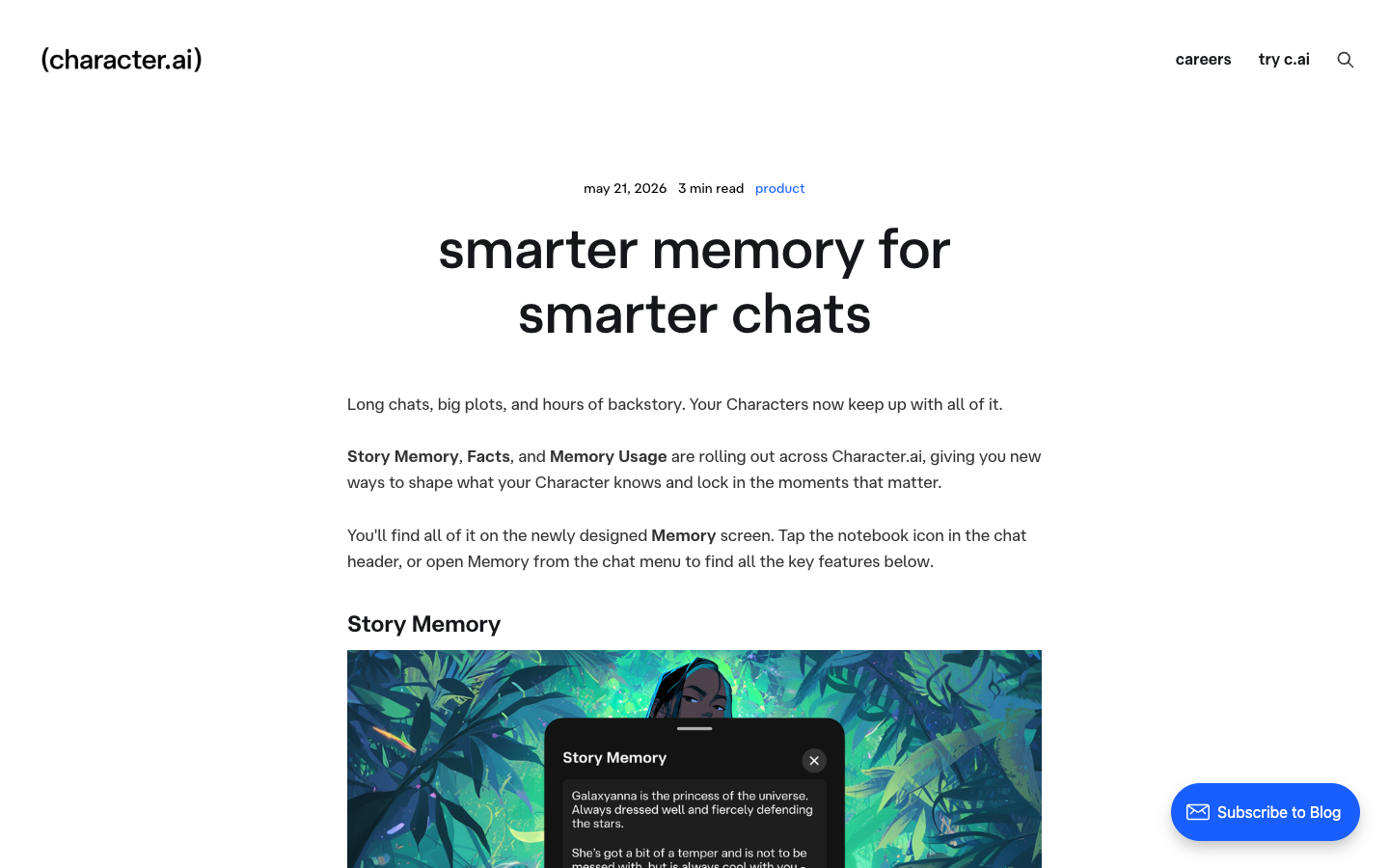
Its search, recognizable characters, mobile experience, and quick first message make it easy to sample ideas without learning prompt architecture. Its 2026 memory update added structured story memory and facts for personas, characters, and side characters, which is more visible control than older reviews describe.
The problem is consistency at depth. Long-running roleplay often needs weekly summaries and pinned memory, and a model change can still disrupt continuity. Short replies, repeated questions, and characters drifting into the same voice are common enough that a serious writer should keep an external recap.
Janitor AI strengths
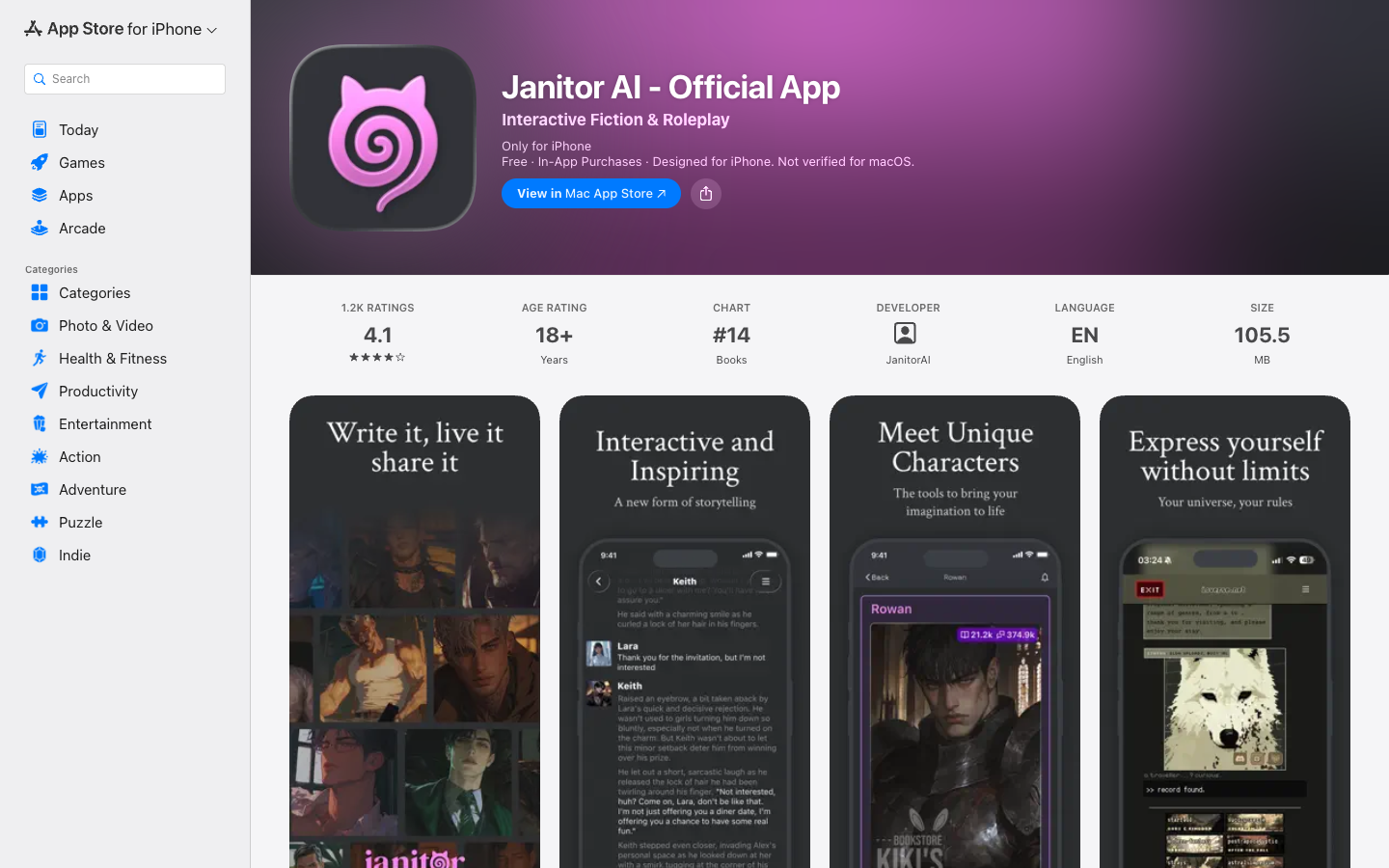
Current app controls include per-chat generation rules, prefill, forbidden words, editing and regeneration. Community guides also document advanced prompts and a chat-memory field that users can maintain as a compact source of truth.
More control creates more variance. A strong bot definition and suitable model can sustain detailed roleplay; a weak card can repeat, narrate the user, cut sentences off, or lose the plot. Check the bot's permanent tokens, keep chat memory current, and change one generation setting at a time.
Maintenance and memory
- Character.AI asks you to steer inside the conversation. The product hides more of the prompt stack, so edits, reminders, and recaps do most of the repair work.
- Janitor AI lets you repair the stack directly. You can change prompts, memory, generation rules, or model source, but you must understand which layer caused the behavior.
- Public bots on both services are authored by other users. A popular character count is not evidence of a well-structured definition.
- Long chat history is not the same as retrievable memory. Preserve names, relationships, unresolved events, and world state in a compact recap you control.
Five-session comparison protocol
- Use the same private characterRecreate one original adult character on both services instead of comparing unrelated public bots.
- Plant five factsInclude a preference, a relationship fact, a location, an unresolved promise, and a minor visual detail.
- Change scenes twiceMove locations and time. Check whether the model preserves state instead of resetting the premise.
- Correct one mistakeSee whether an edit changes later behavior or the same error returns.
- Return after a gapAsk naturally about one planted fact without copying the exact wording. Record spontaneous recall separately from prompted recall.